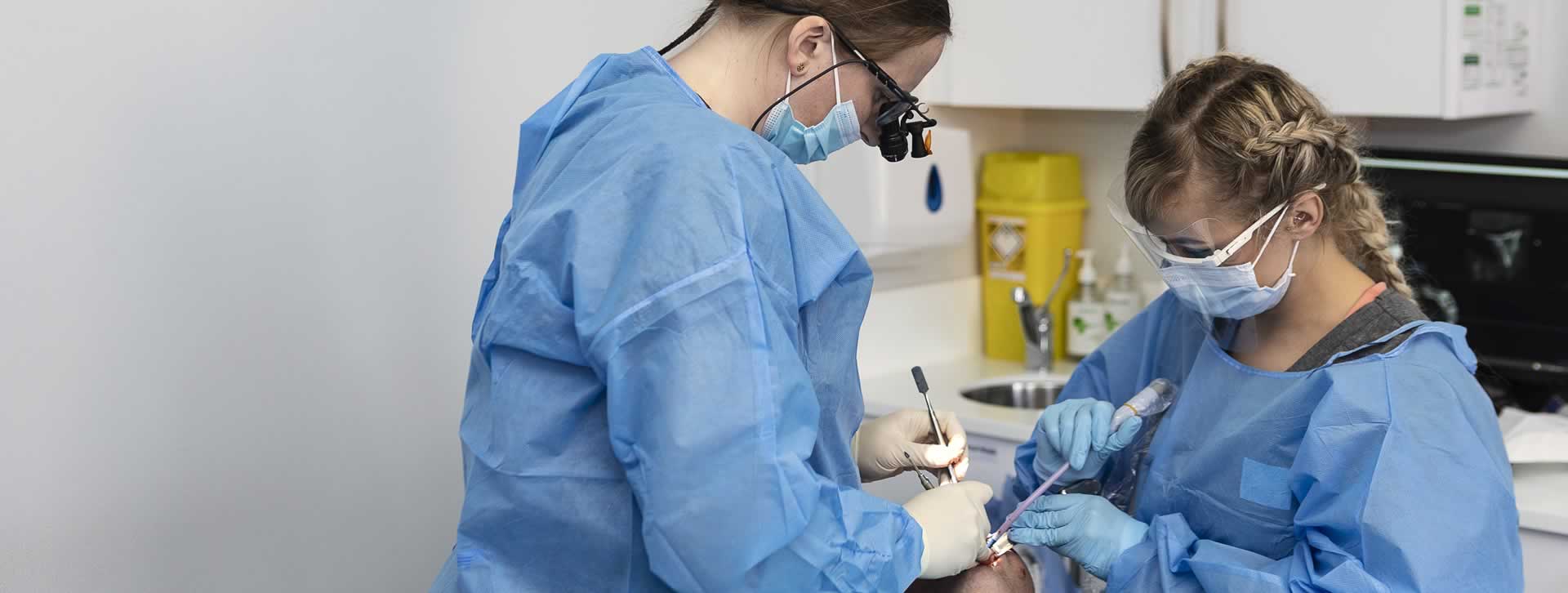
All-on-4 dental implants have become a popular way of replacing a complete arch of missing or failing teeth. By using four implants to support a fixed set of replacement teeth, the treatment can offer a much more secure alternative to conventional dentures.
There are certainly some impressive advantages. The replacement teeth are fixed in place, there is no need to remove them each night, and many people find that they can eat and smile with much more confidence. Cleaning them is straightforward too.
But, like any dental treatment, an ‘All-on-4’ is not perfect and it is not suitable for everybody. If you are considering it, it is worth knowing about the disadvantages as well as the many benefits.
The first thing to understand is that an All-on-4 is not a minor dental procedure. Implants need to be placed into the jawbone and this involves some invasive dental surgery. Although the treatment is carried out using strong anaesthetics, and you will be kept as comfortable as possible, there will inevitably be some recovery afterwards.
There may be some swelling, bruising and soreness for a few days. Most people cope with this reasonably well, but it is still something to take into account when planning your treatment and it is a good idea to ensure that you have a supply of your usual painkillers at hand.
There can also be a period of adjustment while you become accustomed to your new teeth.
There is no getting around the fact that an All-on-4 treatment can represent a substantial initial investment.
The cost reflects the planning, surgery, implants and replacement teeth involved, as well as the expertise and equipment required. It is also worth remembering that you are replacing a complete set of teeth rather than dealing with one individual missing tooth.
It is sensible to look at the treatment as a long-term investment rather than simply comparing the initial price with that of a set of conventional dentures. Our Blake Dental team will explain exactly what is included in the cost and whether there are likely to be any additional expenses.
One of the attractions of the All-on-4 procedure is that it can sometimes be carried out where conventional implant treatment would be more difficult because there is not enough bone for a larger number of implants.
Your overall health, the condition of your gums and jawbone, smoking habits and other factors all need to be considered too. There also needs to be enough suitable bone in the areas where the implants are to be placed.
A thorough assessment is therefore essential and will be carried out at your initial consultation. Sometimes another form of implant treatment, a denture or a different solution may be more appropriate.
Dental implants have a high success rate, but no implant treatment comes with an absolute guarantee.
An implant can fail to integrate properly with the bone, for example. Infection around an implant can also occur, particularly if oral hygiene is poor or there are other risk factors. This does not mean that an All-on-4 is unreliable. It simply means that implants are still artificial replacements and will need to be looked after.
Good daily cleaning, regular dental appointments and professional maintenance all remain important after treatment as you would expect.
One of the things people sometimes overlook is that fixed teeth still need cleaning.
With an All-on-4, you are not simply brushing the visible surfaces in the same way as you would natural teeth. Food particles and plaque can collect around and underneath the replacement teeth, so you may need to use special brushes or other cleaning aids. This can take a little practice, particularly until you have adapted to this.
It is not necessarily difficult, but it is something you need to be prepared to do. Having fixed replacement teeth does not mean you can forget about dental hygiene of course.
One of the main attractions of All-on-4 is being able to eat much more comfortably than with loose or poorly fitting dentures. However, you will probably still need to be careful with your diet while the implants and surrounding tissues are healing. Your dentist will advise you about what you can eat and when. You may need to stick to softer foods for a period before gradually returning to more normal eating.
Even after everything has healed, it is sensible to take some care with very hard foods.
Another point which is sometimes overlooked is that having implants does not mean that you will never need further treatment.
The implants themselves can potentially last for many years with good care, but the prosthetic teeth attached to them are subject to everyday wear and tear. They may eventually need repair, adjustment or replacement. This is particularly worth considering when comparing All-on-4 with other options. You are making a long-term commitment to maintaining the implants and the teeth they support.
Even when the result looks very natural, replacement teeth will not feel exactly the same as your own natural teeth. Natural teeth have a very sophisticated connection with the tissues and nerves around them, allowing you to sense pressure and texture in a particular way. Implant-supported teeth provide excellent function, but the sensation is different.
Most people adapt to this without difficulty, but it is worth having realistic expectations. The aim is to restore appearance and function as effectively as possible, rather than pretending that artificial teeth are identical to natural ones.
The answer to this is not necessarily.The important question is whether the advantages outweigh the disadvantages for you. For someone struggling with loose dentures, badly damaged teeth or extensive tooth loss, the possibility of having a fixed set of replacement teeth can be a major improvement in everyday life.
The treatment does involve surgery, cost, healing and ongoing maintenance. Those are potential disadvantages for some and should not be overlooked. But they need to be considered alongside what the treatment could give you in return.
A good consultation should therefore be about more than simply being told how wonderful All-on-4 can be. You will have the opportunity to discuss with our Witham implant dentist, the possible risks, alternatives, likely results and long-term commitment involved.
If you are considering All-on-4 implants, the best starting point is a proper assessment of your teeth, gums, bone and general suitability. Once these have been considered, you can make a much more informed decision about whether this type of implant treatment is right for you. It has been life-changing for many patients but it’s important to weigh up all of the facts.
To make an initial appointment to discuss the possibility of this treatment, or an alternative, please contact us today either via the form on our website or by calling Blake Dental on 01376 501688.
Design by Dental Media
Katie Annabel Blake trading as Blake Dental is an Introducer Appointed Representative of Financing First Limited, which is authorised and regulated by the Financial Conduct Authority. Katie Annabel Blake is a credit broker, not a lender. The provider of a payment scheme which is not offered through or by Financing First Limited may not be so authorised and regulated.


